Only a few days left to make it a Christmas gift · Order before Dec 15
Free shipping on orders over $365/€319
14-Day Returns* · 2-Year Warranty · Worldwide Shipping, US Included
Want it under the tree? · Order before Dec 15
Free shipping on orders over $399/€350
14-Day Returns*
2-Year Warranty
Worldwide Shipping, US Included
Whether you are a veteran reader who has followed the truyen tranh since the 1990s or a new fan who discovered Luffy via live-action Netflix, one truth remains eternal: The One Piece is real. Keywords integrated: truyen tranh Luffy, entertainment content, popular media, One Piece manga, anime adaptation, live-action, video games, social media trends.
What began as Eiichiro Oda’s dream in the pages of Weekly Shonen Jump has become a backbone of modern popular media. This article explores the seismic impact of Luffy’s journey, analyzing how this specific form of has redefined anime, Hollywood adaptations, video games, and social media fandom. The Genesis: Why "Truyen Tranh Luffy" Remains the Core Canon Before diving into Netflix series and blockbuster games, we must pay respect to the origin. The phrase truyen tranh Luffy is not merely a search term; it is a gateway to the purest form of One Piece . While anime fills in the gaps with voice acting and motion, the manga remains the sacred text.
The surrounding Luffy—from Netflix shows to TikTok edits, from video games to theme parks—all orbits the black-and-white ink of the original manga. As long as Oda continues to draw, and as long as fans continue to believe in the romance of adventure, Luffy will not just be the Pirate King; he will be the King of Transmedia.
In the vast, ever-expanding universe of global pop culture, few figures stand as tall as a rubber boy in a straw hat. For over two decades, truyen tranh Luffy —the Vietnamese term for the manga featuring Monkey D. Luffy from One Piece —has evolved from a simple serialized comic into a multi-billion dollar ecosystem of entertainment content.
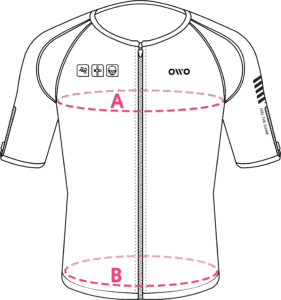
Measure your chest (A) and hips (B) following our indications.
The reference measurement will always be the larger of the two (A or B).
Look in the chart to which size corresponds to that measurement.
| Size | Reference measurements | |
|---|---|---|
| Inches | Centimeters | |
| 2XS | 25.6 – 29.4 | 65 – 74 |
| XS | 29.5 – 32.6 | 75 – 82 |
| S | 32.7 – 36.1 | 83 – 91 |
| M | 36.2 – 39.7 | 92 – 100 |
| L | 39.8 – 42.8 | 101 – 108 |
| XL | 42.9 – 46.3 | 109 – 117 |
| 2XL | 46.4 – 49.9 | 118 – 126 |
| 3XL | 50 – 53 | 127 – 134 |
| 4XL | 53.1 – 55.9 | 135 – 142 |