Odin Rqtclose Best [ 2025 ]
Before using on production, test: odin rqtclose --dry-run --pid=$$ This simulates the close without executing it.
By implementing the syntax, timing, and error handling practices outlined in this guide, you will ensure that your Odin environments run cleaner, close safer, and perform better than ever before.
Furthermore, the open-source community is currently beta-testing rqtclose-ng (next generation), which utilizes machine learning to predict the optimal grace period based on historical transaction times. Early benchmarks suggest this will reduce closure-related latency by 40%. The search for "odin rqtclose best" is more than a query; it is a commitment to engineering excellence. You have learned that rqtclose is not merely a command—it is a philosophy of respectful resource management. |
 Modeling Nature and Physics is a growing practice for reaching
true-to-life systems simulations with 'alive' feedbacks, including complexity
management and unpredictability integration.
Modeling Nature and Physics is a growing practice for reaching
true-to-life systems simulations with 'alive' feedbacks, including complexity
management and unpredictability integration.
While in the past running an accurate Physical Modeling simulation was possible
(due to its complexity) only on expensive multi-processor workstations or even
computer clusters, today thanks to the exponential increase of modern CPUs' processing
power, reaching parity with real instruments is possible
in real-time (including polyphony and multi-istances possibilities) at a fraction of the costs.
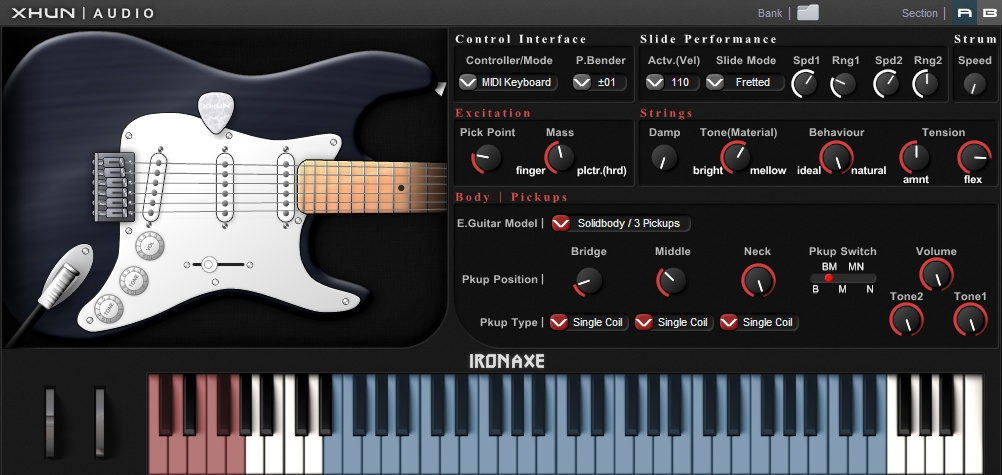
IronAxe is the first in a series of instruments developed by Xhun Audio to use this revolutionary technology.
The core of this kind of approach is the interaction between the Instrument's model, the Performer's model
and the Unpredictability simulation.
All the six Strings, the Transducers (Pickups), the Plectrum/Finger excitation and more as well
as Performer's actions like Palm Muting, Tapping Harmonics (even muting a String after
its excitation is possible) are physically simulated. Add Unpredictability (instrument's and
performances' micro-imperfections) to the equation and what you hear at the end of
the whole process is given by the interaction of this three worlds.
The result is an 'alive' instrument, a state-of-the-art simulation for an unparalleled realism.
|
|
Before using on production, test: odin rqtclose --dry-run --pid=$$ This simulates the close without executing it.
By implementing the syntax, timing, and error handling practices outlined in this guide, you will ensure that your Odin environments run cleaner, close safer, and perform better than ever before.
Furthermore, the open-source community is currently beta-testing rqtclose-ng (next generation), which utilizes machine learning to predict the optimal grace period based on historical transaction times. Early benchmarks suggest this will reduce closure-related latency by 40%. The search for "odin rqtclose best" is more than a query; it is a commitment to engineering excellence. You have learned that rqtclose is not merely a command—it is a philosophy of respectful resource management.
|
|