1. Standard Oriya Keyboard Layout
High resolution image suitable for printing.
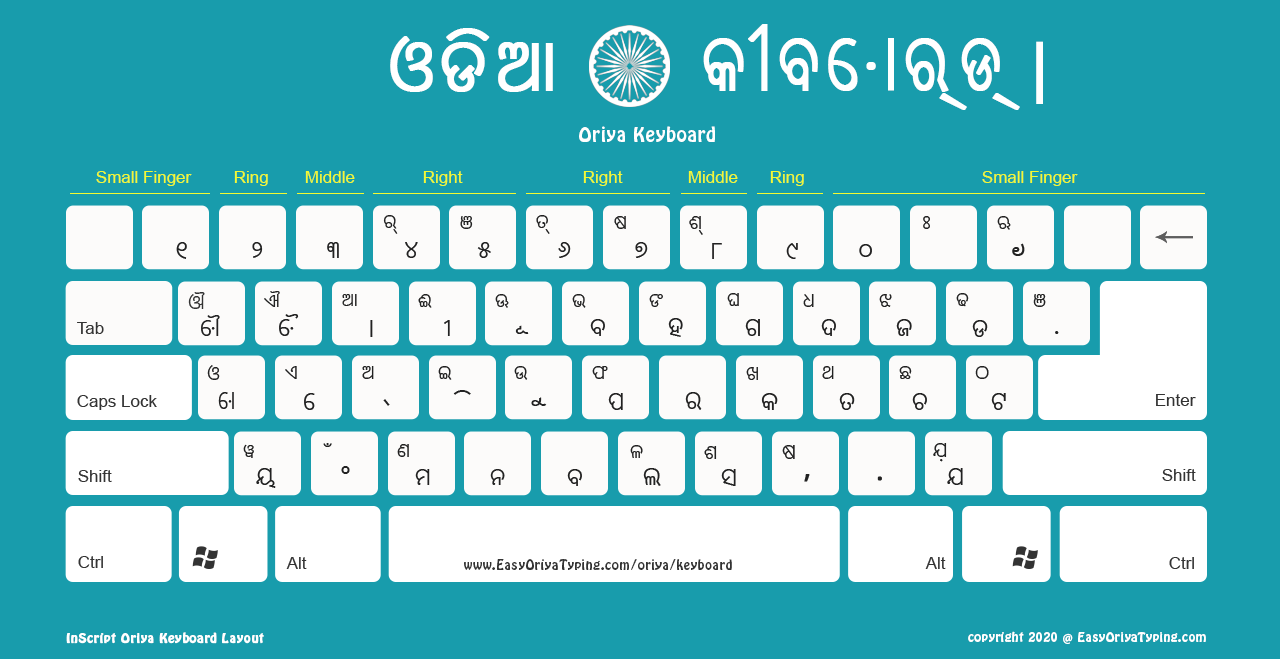
We have five different Oriya keyboard layouts for you to download on your computer. Once downloaded — you can use it as a reference to type in Oriya either on Word document or any other text editor. You also need to download the matching Oriya fonts.
High resolution image suitable for printing.
High resolution image suitable for printing.
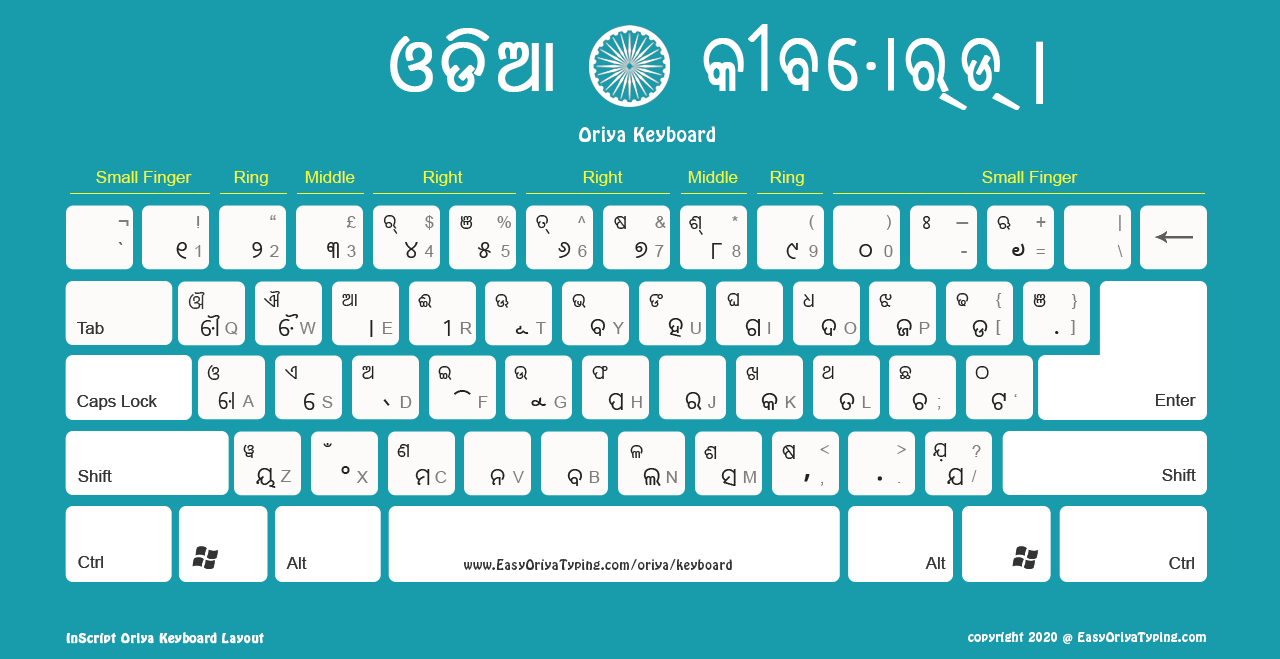
High resolution image suitable for printing.
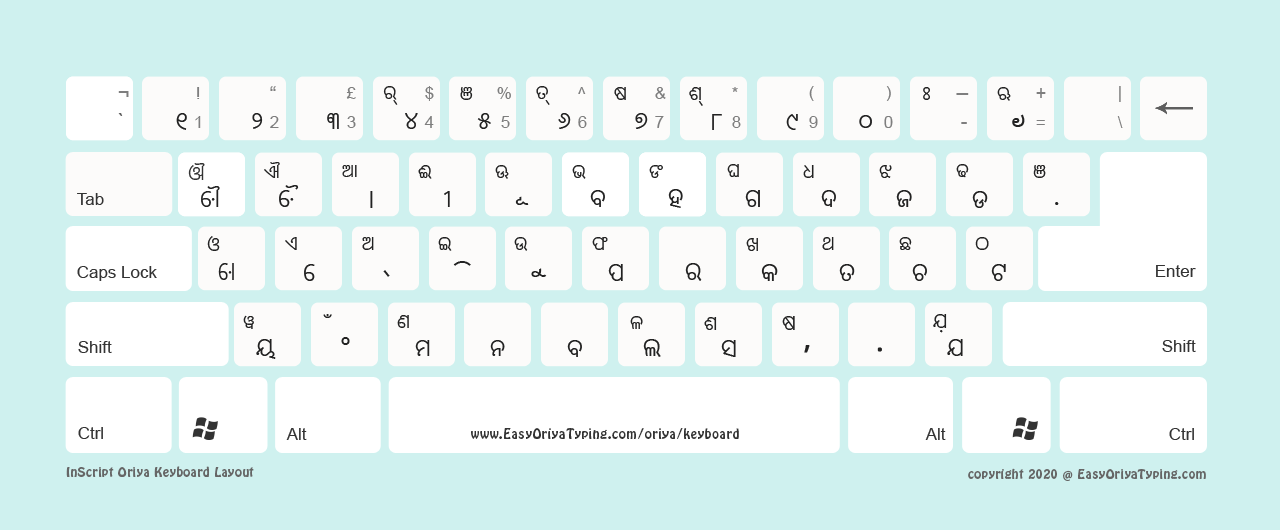
High resolution image suitable for printing.
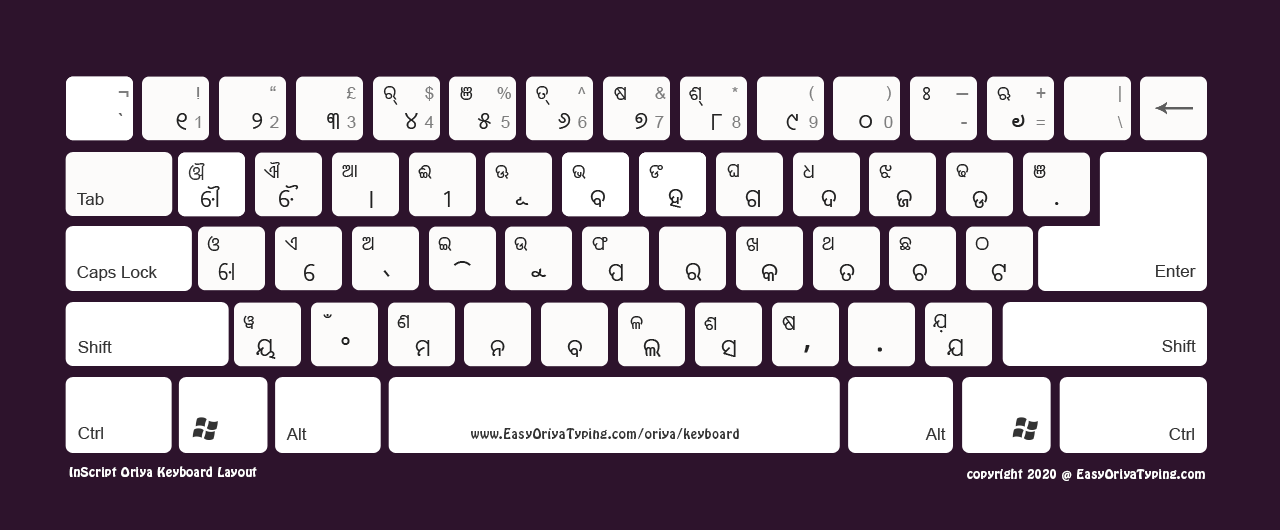
High resolution image suitable for printing.
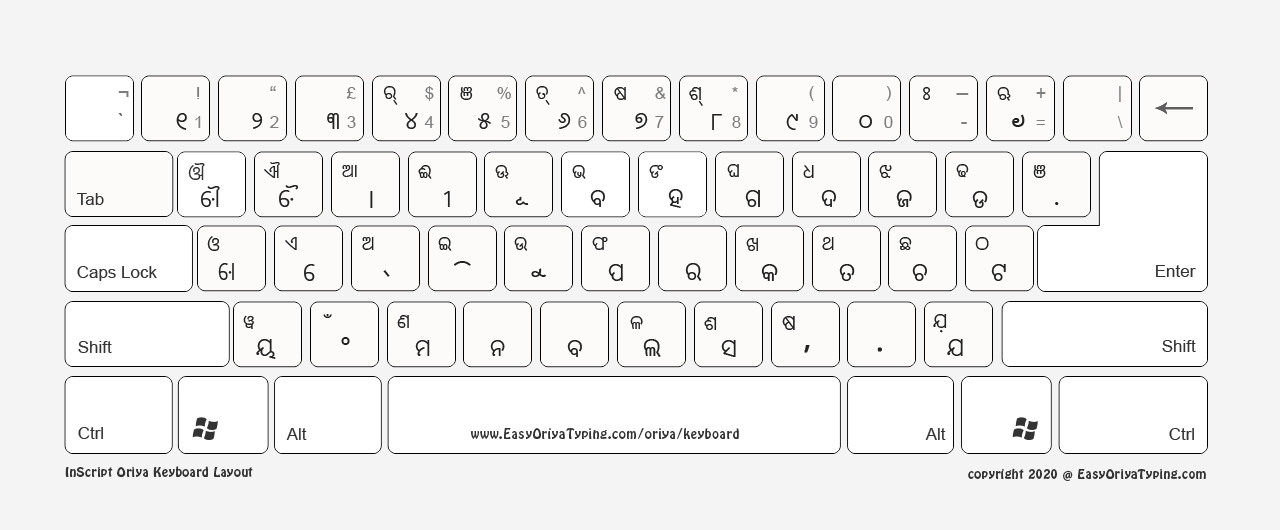
Getting started with Oriya typing is simple! Follow our step-by-step process.
Install Odia font — head over to our extensive fonts repository and install your preferred typeface.
Download your ideal keyboard image through this simple downloading process:
Browse and click on your preferred keyboard style
Right-click anywhere on the enlarged image
Choose "Save image as..." and pick your storage location
Prepare your writing space by launching your go-to text application and activating the Oriya font you installed in step one.
Begin your Oriya writing journey! Display your keyboard reference image alongside your text editor for seamless typing guidance.
Space-saving tip: Working on a compact setup? Our high-resolution keyboards deliver stunning print quality — create a physical reference that's always within reach!
Ensures traditional accuracy — each layout preserves authentic Oriya script conventions and cultural writing traditions.
Offers complete flexibility — choose from multiple styles and backgrounds to match your personal or professional preferences.
Includes unrestricted usage rights — download, print, share, and modify for any purpose without limitations or hidden costs.
This audacity has sparked debate. Does Episode 0 work as a standalone? Yes—it tells Yuki's full arc from ambition to motherhood to departure. But watching it without the context of the Takamine family's later grief may feel like reading a eulogy for a stranger. The intended experience is clearly cumulative. The use of "0" instead of "1" or "Prologue" signals a non-linear viewing order . The main series (set to be 6 episodes, each 25 minutes) opens with Haruki arriving at the ruined garden. The audience then carries the secret of Episode 0—knowing that the overgrown azaleas by the shed were planted on Yuki's last birthday. This dramatic irony transforms every quiet moment into a silent scream.
In an era where anime often prioritizes high-concept hooks, Episode 0 dares to be small, slow, and devastatingly human. It reminds us that the best stories are not the ones with the most explosions, but the ones that teach you how to look at a flower and see a lifetime.
Slated for a limited theatrical release in Japan before a global streaming debut, this OVA has already drawn comparisons to melancholic masterpieces like Clannad: After Story and Maquia: When the Promised Flower Blooms . But unlike those fantasy-driven epics, Garden Takamine-ke no Nirinka grounds its drama in the quiet petals of a household garden—hence the name "Nirinka" (二輪花), often translated as "The Two-Wheeled Flower" or, more poetically, "The Flower That Blooms on the Second Turn."
The episode is framed without dialogue for its final 15 minutes, relying entirely on visual metaphor, piano composition by strings, and the animation of petals falling in reverse—suggesting time bending backward toward hope. Animation Style and Sound Design Studio Petal (fictional) has employed a hybrid technique: the backgrounds are watercolor textures while characters are drawn with soft, almost fragile linework reminiscent of Mushishi . The garden itself is a character—overgrown with wisteria, moss-covered stone lanterns, and a small koi pond that reflects the sky only when a character tells the truth.
 Sambhu Raj Singh ·